English - EN
 繁體 - ZH-TW
 简体 - ZH-CN
 Español - ES
 日本語 - JA
 العربية - AR
 Русский - RU
 Français - FR

PCR Blown Film Technology: Turning Recycled Plastics into Reliable Film Production
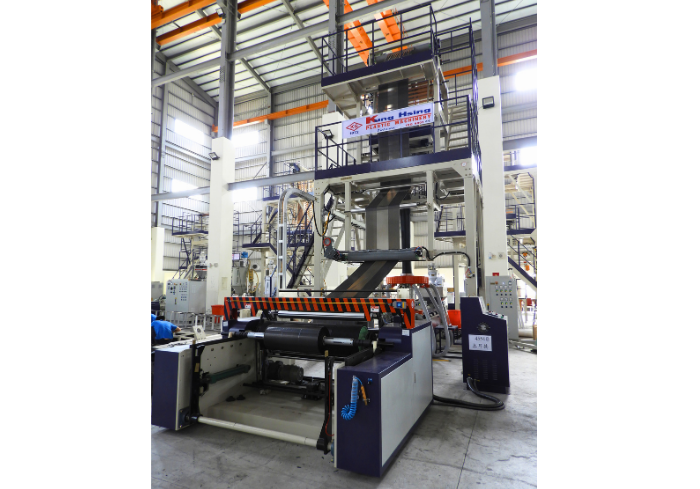
As demand for recycled-content packaging grows, the real challenge is no longer simply incorporating PCR materials — it is processing them consistently, efficiently, and reliably.
Post-consumer recycled (PCR) plastics are becoming increasingly important in the flexible packaging industry as brand owners, converters, and film manufacturers respond to sustainability goals and evolving packaging requirements.
However, processing PCR materials presents distinct challenges compared with virgin resins. Variations in material composition, melt flow behavior, contamination levels, and thermal history can affect extrusion stability, bubble formation, film thickness uniformity, and final film properties.
For blown film manufacturers, the key question is:
How can we turn variable recycled materials into consistent, production-ready films?
1. The Technical Challenges of PCR Blown Film Extrusion
Unlike virgin polymers with relatively predictable properties, PCR resins can vary significantly depending on their source, collection, sorting, and recycling processes.
These variations can create several processing challenges:
• Bubble stability: Changes in melt strength and rheological behavior can narrow the stable processing window.
• Film quality: Contamination, gels, and material incompatibility may affect film appearance and consistency.
• Thickness uniformity: Fluctuations in material behavior and processing conditions can make gauge control more demanding.
• Production efficiency: Unstable processing conditions may lead to more frequent adjustments, increased waste, and reduced operating efficiency.
Addressing these challenges requires more than selecting the right recycled resin. It requires a coordinated approach to material preparation, extrusion, cooling, process control, and downstream handling.
2. Key Technology Trends Shaping PCR Blown Film Production
Trend 1: Designing Extrusion Systems Around Material Variability
As PCR content increases, equipment and process settings must accommodate a wider range of material properties. Screw configuration, melt homogenization, die conditions, cooling, and haul-off stability all contribute to the overall process window.
The objective is not simply to process recycled material, but to establish repeatable operating conditions that support consistent production.
Trend 2: Advancing Filtration and Melt Quality Management
Contamination and gels remain important concerns in PCR film production. Appropriate melt filtration and upstream material preparation can help reduce foreign particles and improve processing consistency.
Filtration must also be matched to the feedstock and production requirements, since excessive pressure buildup or frequent screen changes can affect throughput and operating costs.
Trend 3: Expanding the Role of Multilayer Co-Extrusion
Multilayer blown film technology offers additional flexibility in film structure design. Depending on the application, manufacturers can allocate PCR materials to selected layers while using other layers to support surface quality, sealing performance, or specific functional requirements.
However, the best layer configuration depends on resin compatibility, product specifications, and the intended PCR content. Multilayer construction is a design tool, not an automatic guarantee of better film performance.
Trend 4: Focusing on Stable Production, Not PCR Percentage Alone
A high recycled-content target is meaningful only when the resulting film meets the requirements of its intended application.
Manufacturers increasingly need to evaluate the relationship between recycled-content percentage, film quality, production stability, material utilization, and overall operating costs.
The long-term objective is to achieve a practical balance between sustainability targets and reliable manufacturing performance.
3. Kung Hsing Plastic Machinery: Supporting PCR Film Production with Flexible Blown Film Solutions
At KS, we believe that sustainable manufacturing starts with reliable engineering.
With more than five decades of experience in plastic extrusion machinery, KS provides blown film solutions designed to meet different material requirements and production needs.
Our 100% PCR Blown Film Line is designed for manufacturers exploring the processing of post-consumer recycled materials. Depending on the application and material characteristics, available machine configurations include monolayer and multilayer co-extrusion solutions, including ABA structures.
These configurations provide different approaches to PCR film production:
• Monolayer blown film lines: A straightforward option for applications where the material properties and finished-film requirements are suitable for a single-layer structure.
• ABA co-extrusion lines: Offer greater flexibility in allocating materials across layers, depending on the desired film structure and application.
• Multilayer co-extrusion solutions: Provide additional design flexibility when different layers need to fulfill different material or functional requirements.
The appropriate configuration depends on the PCR resin, target recycled-content level, film specifications, and production conditions. Material evaluation and processing trials remain essential to determining the most suitable solution.
4. Building a More Practical Path Toward Circular Manufacturing
The future of PCR blown film production will not be defined by recycled-content targets alone. It will also depend on how effectively manufacturers manage material variability, maintain film quality, and establish reliable production processes.
At KS, we work toward this goal through practical engineering, flexible equipment configurations, and a commitment to long-term customer partnership.
Reliable Technology, Sustainable Future.
Let's explore how blown film technology can help turn recycled materials into dependable film production.
Learn more about KS: http://www.kunghsing.com.tw





شريك التعاونية