

 English - EN
  繁體 - ZH-TW
  简体 - ZH-CN
  Español - ES
  日本語 - JA
  العربية - AR
  Русский - RU
  Français - FR
TaipeiPLAS 2026 Floor Report | AI, Circular Manufacturing and Global Markets Reshape Taiwan’s Plastics Industry
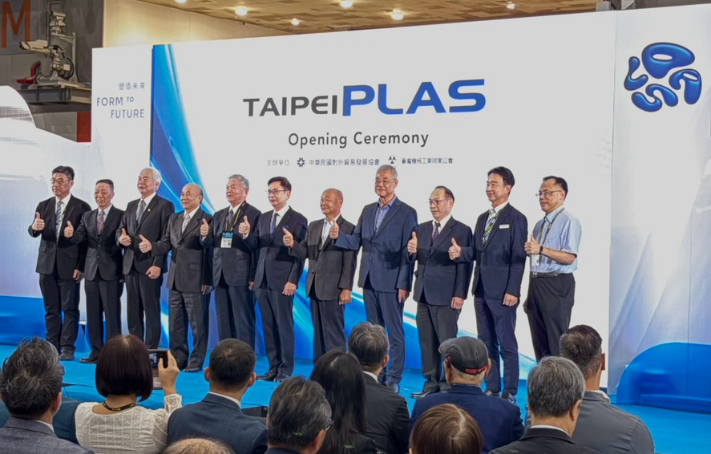
TaipeiPLAS 2026, the Taiwan's No.1 International Plastics & Rubber Industry Show, returned to Nangang Exhibition Center, Hall 1, during September 15 to 19 under the theme “Form to Future.”
Across the show floor, the direction of the industry was clear. Competition in plastics machinery and rubber machinery is no longer defined by machine speed, output and price alone.
AI manufacturing, smart manufacturing, plastics automation, energy efficiency, plastic recycling and international market development are increasingly becoming part of the same manufacturing strategy.
For Taiwan machinery suppliers, the challenge is also evolving. Building reliable equipment remains essential, but manufacturers are now expected to connect production technology with sustainability, digitalization and access to the global plastics market.
TaipeiPLAS 2026 offered a close-up view of how Taiwan’s plastics and rubber industry is responding to that shift.
Smart Manufacturing and AI Manufacturing Move onto the Production Floor
One of the strongest themes at TaipeiPLAS 2026 was the expansion of smart manufacturing.
Across injection molding, material handling, blown film, extrusion and bag-making equipment, manufacturers showcased intelligent monitoring, servo systems, automated controls and production data integration.
The conversation has shifted beyond one simple question: how fast can a machine run?
Buyers are increasingly asking how machinery can reduce energy consumption, minimize material waste, improve process stability and support production with fewer operators.
This is where AI manufacturing and plastics automation are becoming more relevant. Machinery is gradually moving from standalone production equipment toward connected systems designed to make factories more efficient and easier to manage.
Circular Manufacturing and Plastic Recycling Become Production Priorities
Another major focus at TaipeiPLAS 2026 was circular manufacturing.
Recycled materials, energy-efficient equipment, material recovery and plastic recycling technologies are no longer treated as separate ESG topics. They are increasingly influencing machinery design and purchasing decisions.
For manufacturers working with recycled materials, stable feeding, filtration, contamination control and material consistency all directly affect production quality.
As sustainability requirements continue to shape the global plastics market, equipment suppliers are under increasing pressure to help processors improve productivity while reducing energy use and material loss.
Taiwan Plastics Machinery Suppliers Showcase Different Paths to Smarter Production
Taiwan has long been recognized as an important manufacturing base for plastics processing equipment.
At TaipeiPLAS 2026, several Taiwan machinery brands demonstrated how local suppliers are responding to changing global demand through automation, energy efficiency and specialized production technologies.
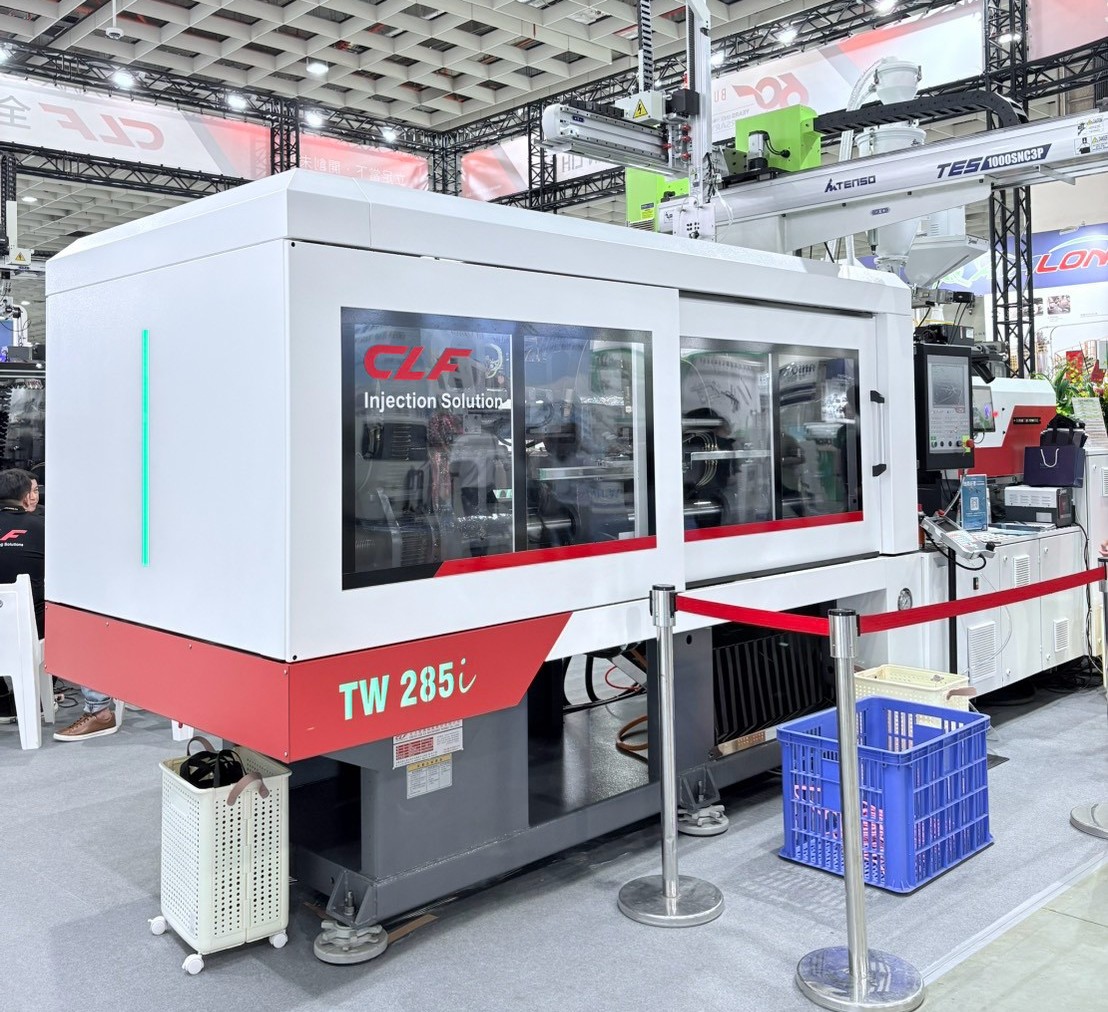
1. CLF
CLF highlighted all-electric and large-scale 5000 tons injection molding technologies focused on precision, energy efficiency and high-performance production.
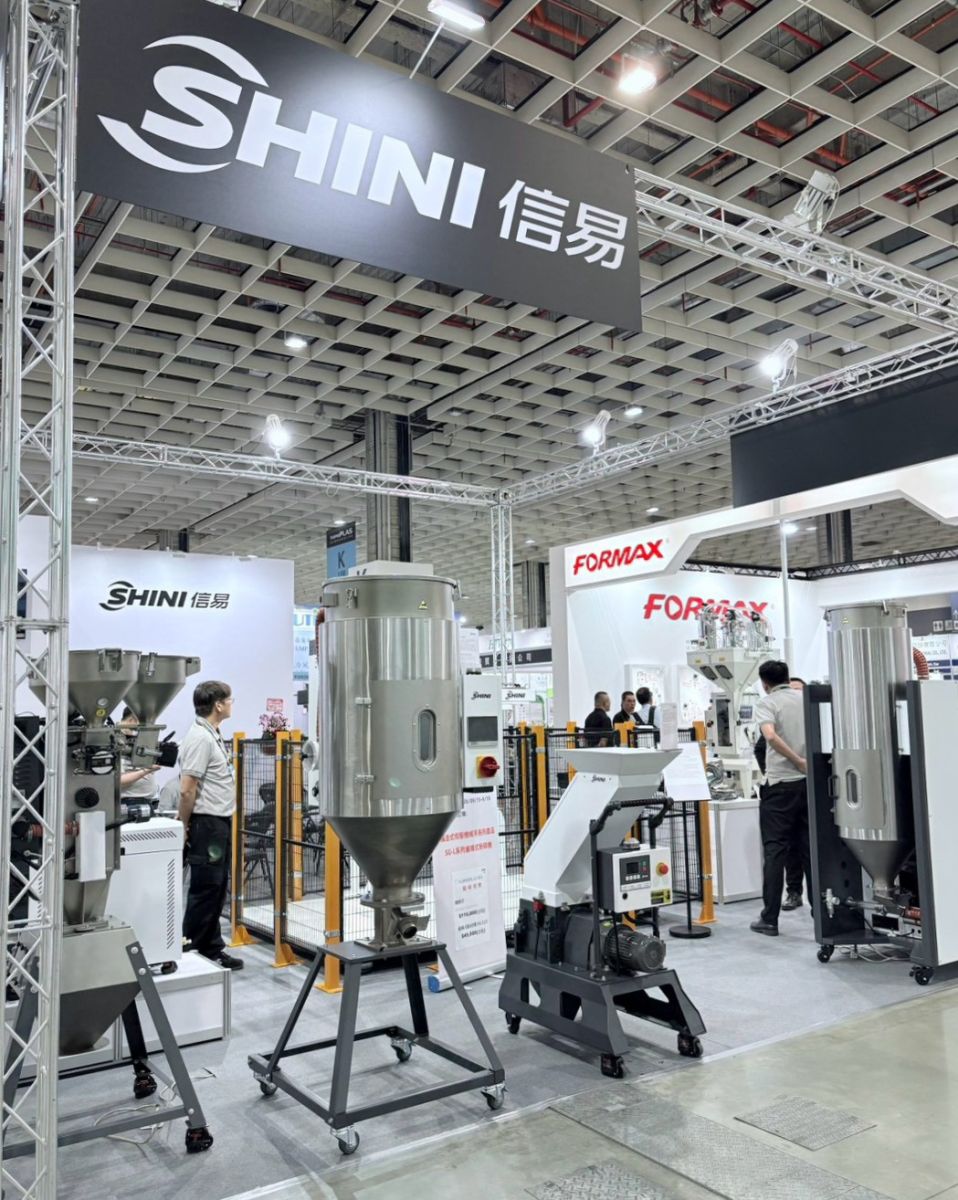
2. SHINI
SHINI presented integrated material handling, drying, conveying, temperature control, centralized feeding and recycling systems, showing how factories are moving toward connected plastics automation.
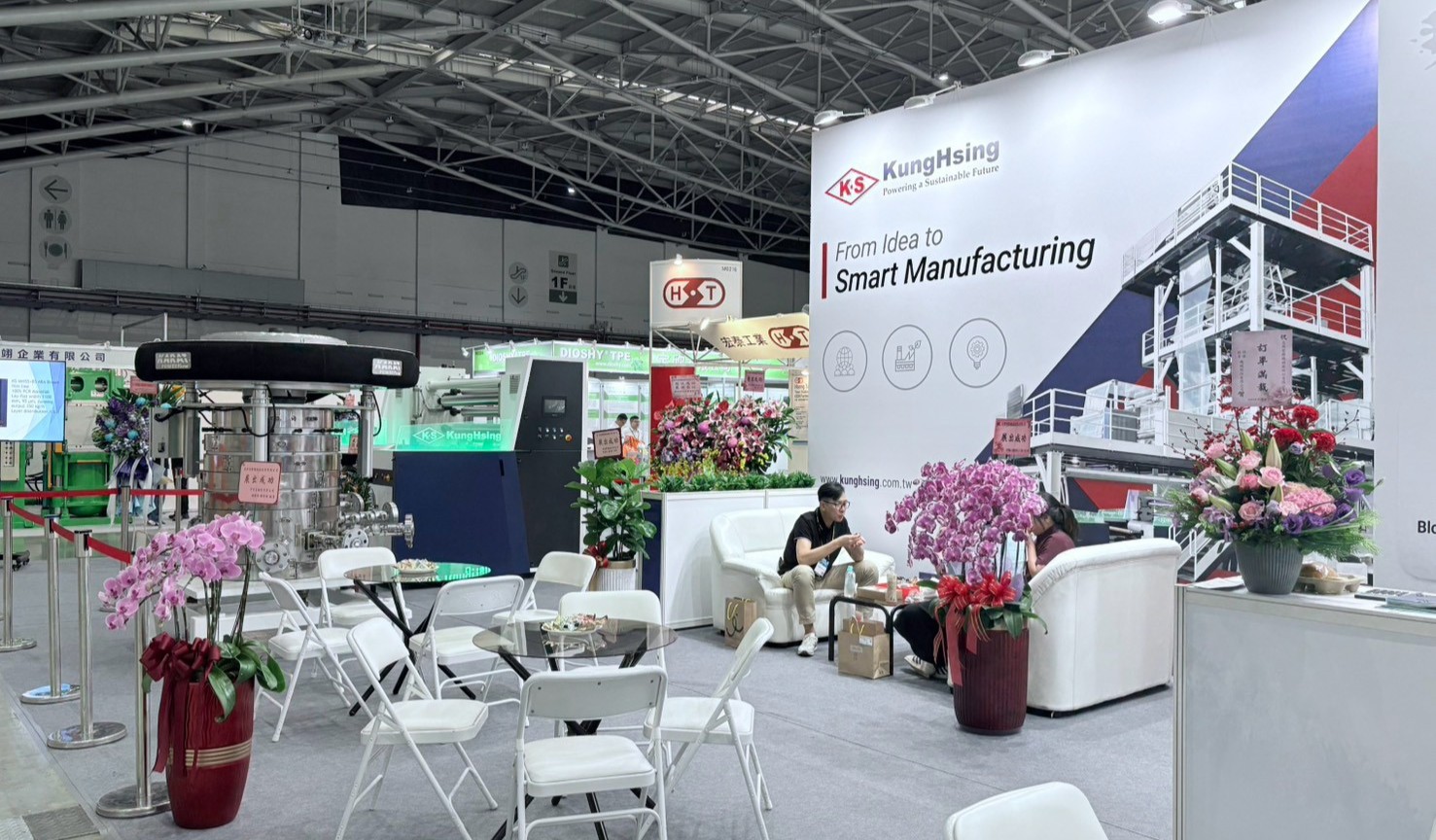
3. KUNG HSING
KUNG HSING focused on high-output multilayer blown film technology, including film thickness control, cooling efficiency and stable production for flexible packaging applications.
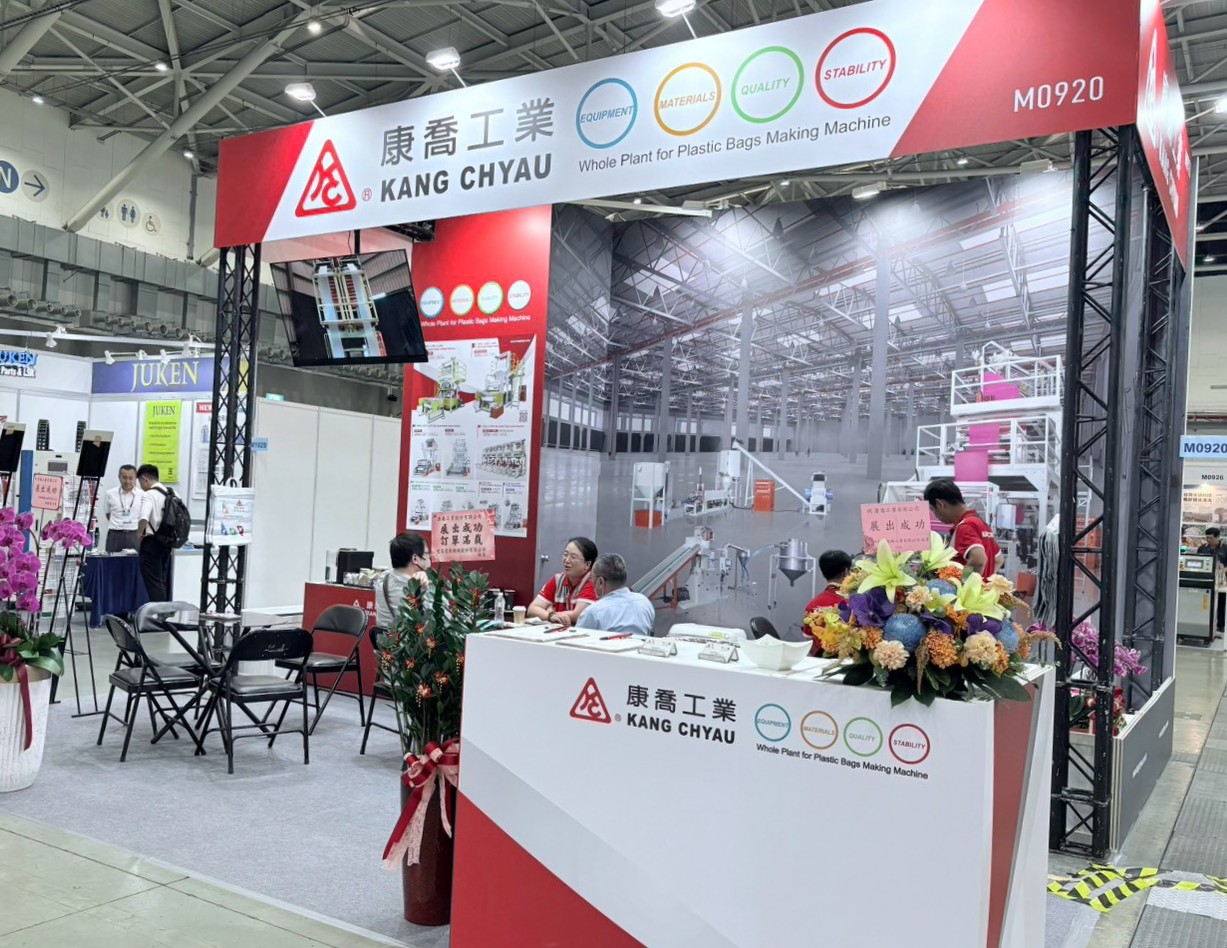
4. KANG CHYAU
KANG CHYAU showcased blown film and turnkey plastic bag production solutions, emphasizing flexibility and customized production configurations for different materials and end products.
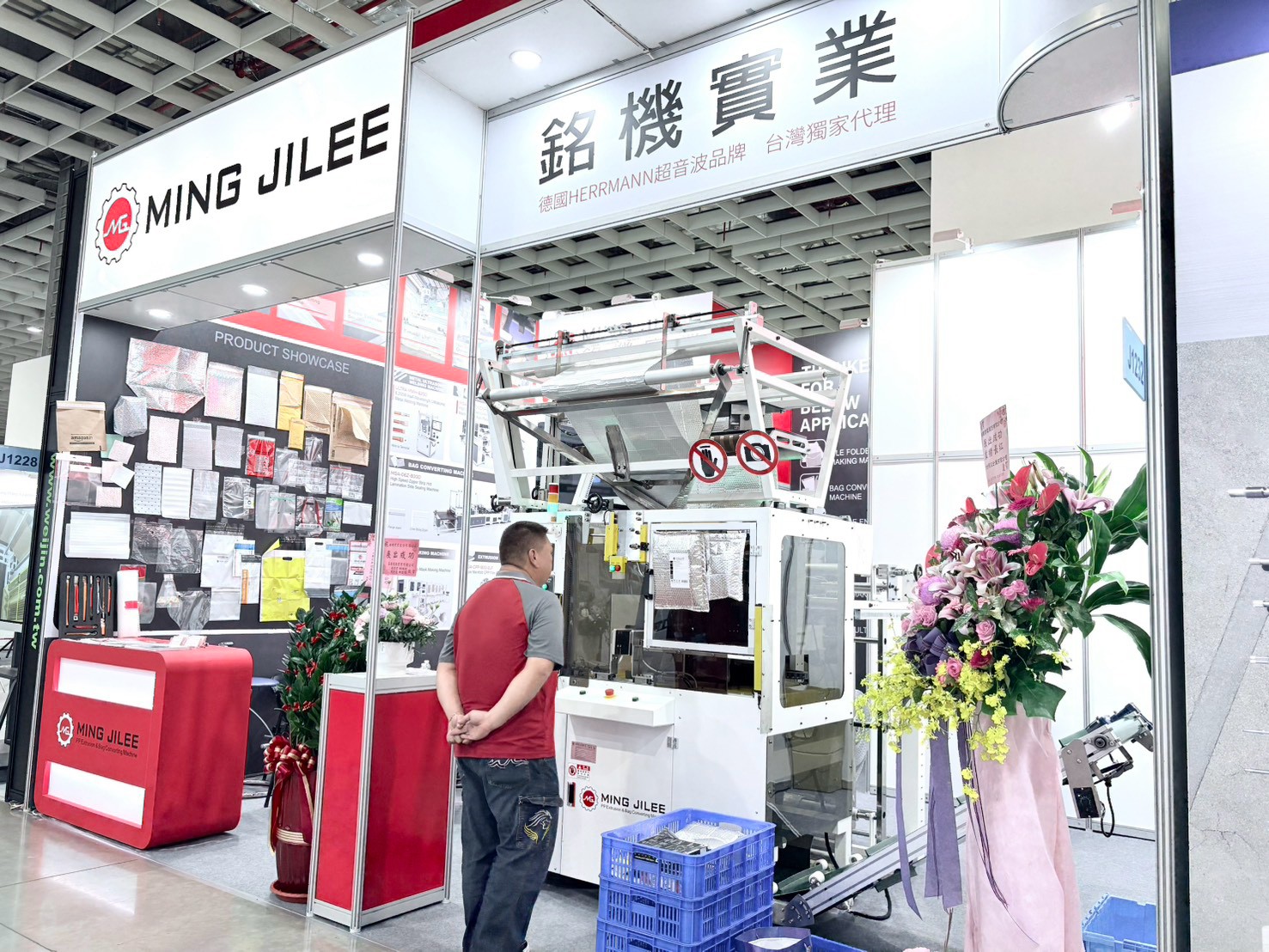
5. MING JILEE
MING JILEE presented automated sealing and cutting machinery for document sleeves, L-folders and related flexible plastic products.
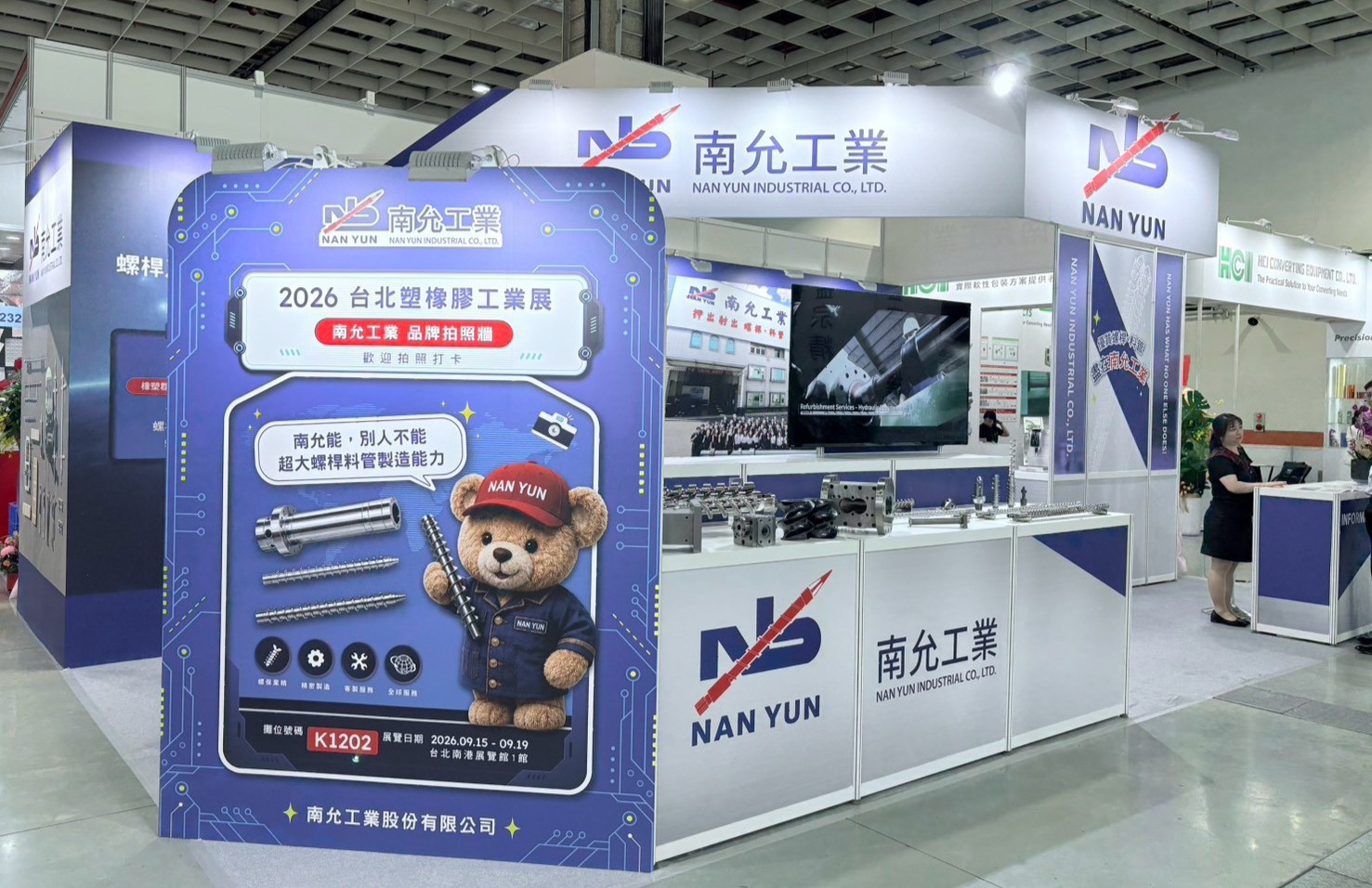
6. NAN YUN
NAN YUN featured co-rotating twin-screw extrusion technology for compounding, material modification and recycling applications, supporting the growing demand for circular manufacturing.
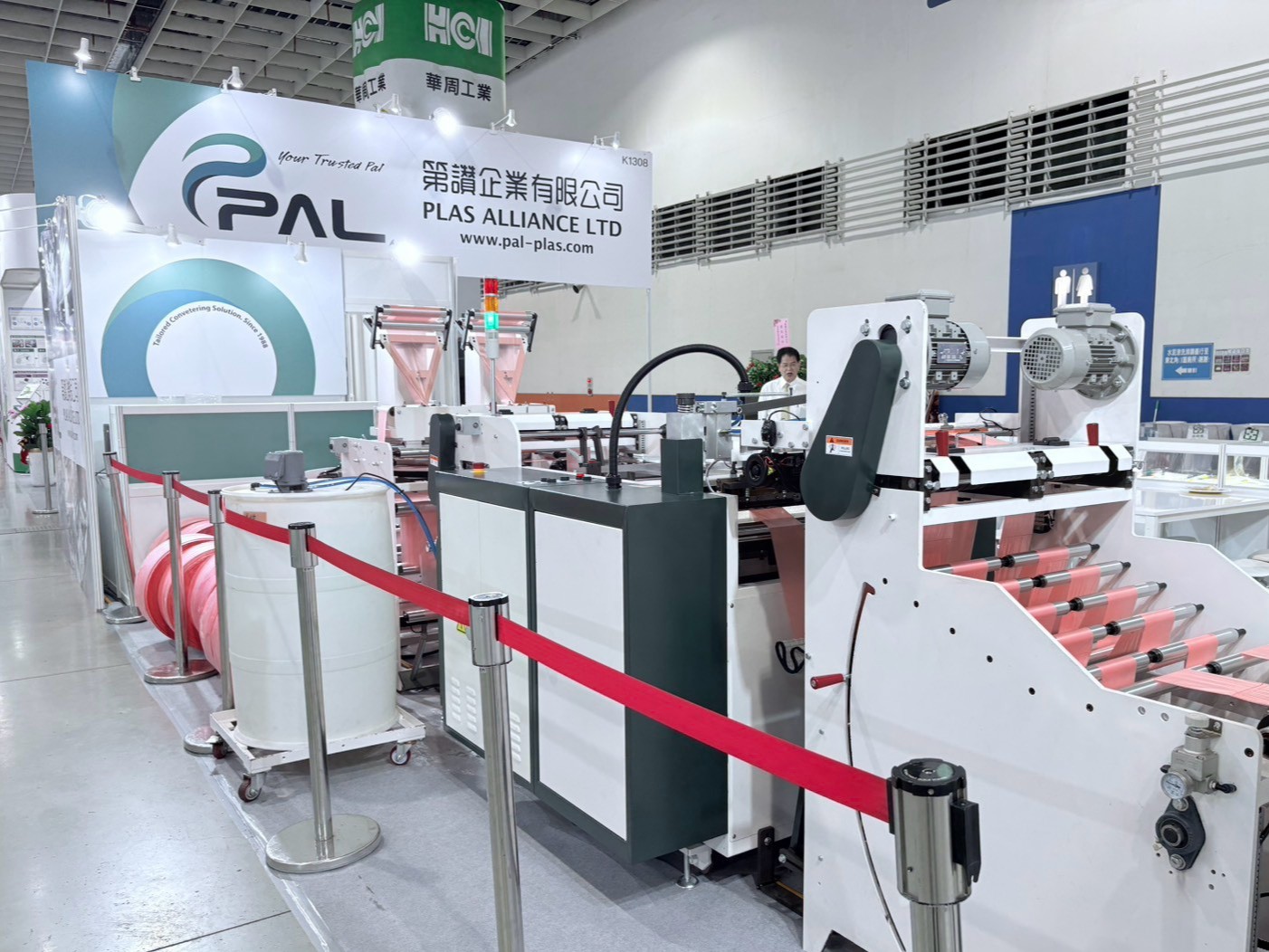
7. PLAS ALLIANCE (PAL)
PAL focused on high-speed automated bag-making machinery designed to improve sealing accuracy, changeover efficiency and material utilization.
Together, these exhibitors showed how Taiwan’s plastics machinery sector is moving toward greater automation, energy efficiency and production flexibility.
International Buyers Arrived with Clear Purchasing Needs
Beyond machinery, TaipeiPLAS 2026 also reflected changes in the global plastics market.
International buyers were not simply walking the show floor to explore new technology. Many arrived with specific machinery requirements, production capacities, materials, applications and expansion plans already in mind.
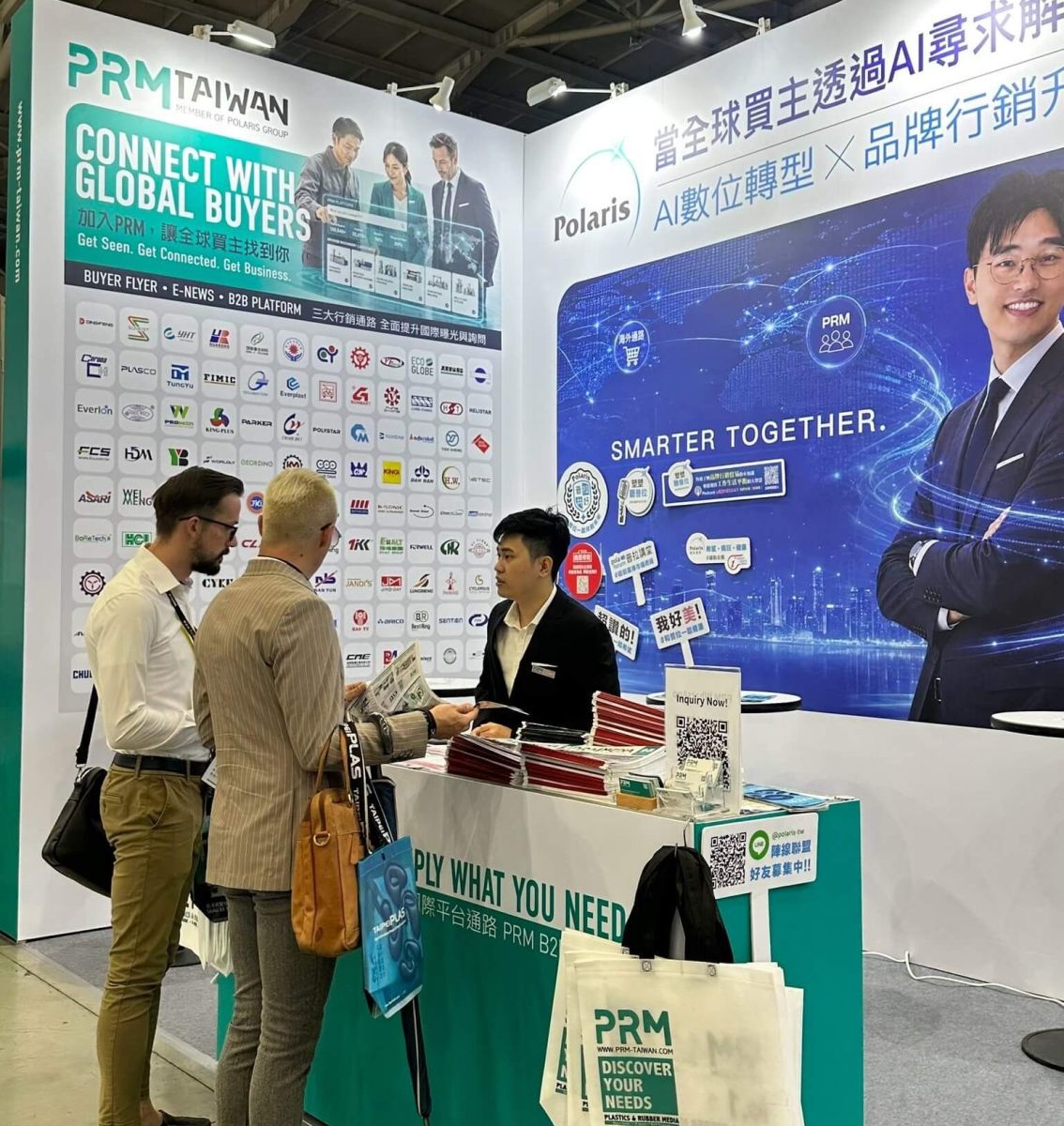
This was also reflected in PRM’s on-site inquiries.
More than 75% of the inquiries collected by PRM during TaipeiPLAS came from foreign buyers who had traveled to Taipei specifically for Taiwanese Plastic and Rubber machines.
This is an important signal for Taiwan manufacturers.
Trade shows continue to attract serious overseas buyers, but simply exhibiting equipment is not enough. Suppliers must also be able to quickly communicate what they specialize in, what production problems they solve and why their machinery is relevant to a particular application.
From the Exhibition Floor to Global Search: Polaris and PRM at TaipeiPLAS
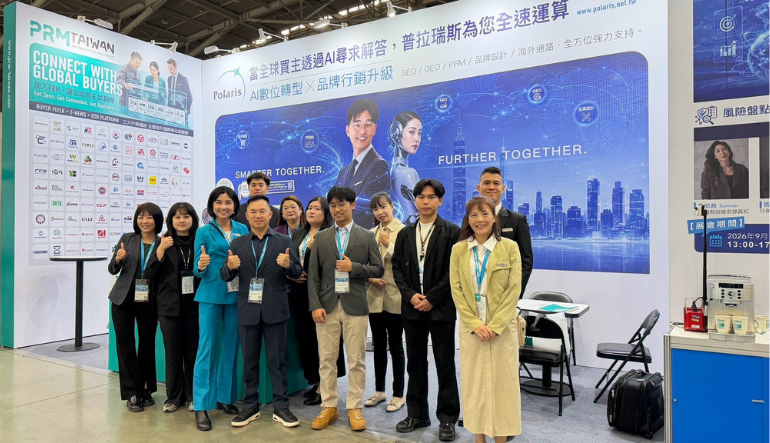
Polaris Creative and PRM joined TaipeiPLAS 2026 under the theme “AI Digital Transformation × Brand Marketing Upgrade.”
The team presented international marketing services, the PRM-TAIWAN global B2B platform and the ASK PRM intelligent supplier-matching system.
For B2B manufacturers, an exhibition creates concentrated visibility for a few days. The larger challenge is maintaining that visibility after the event ends.
Can international buyers still find the supplier online? Can they quickly understand its technical capabilities? Can an online search eventually turn into a qualified inquiry?
ASK PRM is designed around this process.
By combining PRM’s plastics and rubber industry database with supplier information, the system helps overseas buyers identify Taiwanese manufacturers that match specific machinery, application and technical requirements.
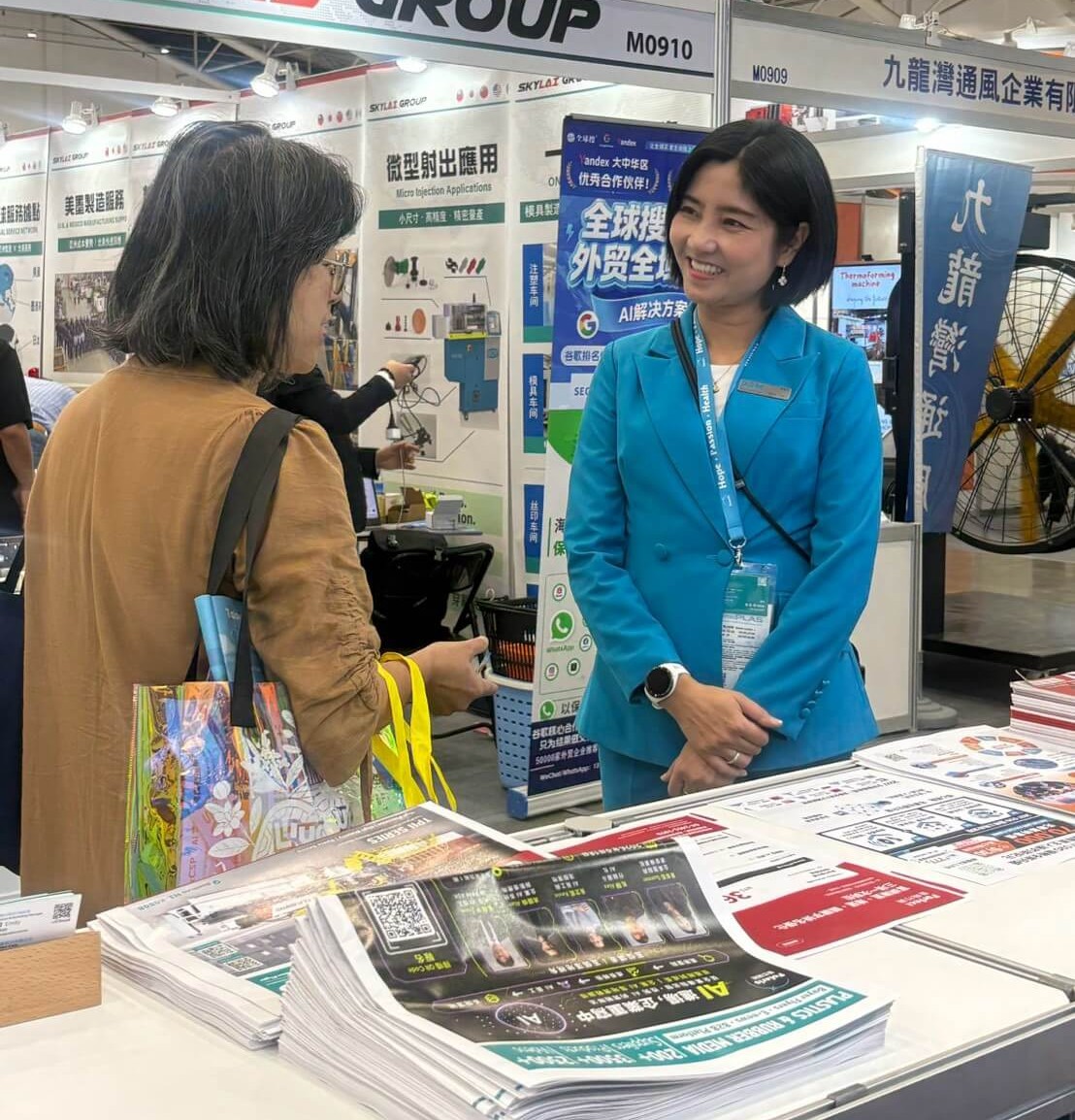
During the exhibition, the PRM team also spoke directly with overseas buyers about machinery investments, capacity expansion and material requirements, helping connect those needs with relevant machinery suppliers.
TaipeiPLAS 2026 Shows How Manufacturing Competitiveness Is Changing
TaipeiPLAS 2026 showed that the plastics and rubber industry is not simply adopting new machinery. It is redefining what manufacturing competitiveness means.
Smart manufacturing, AI manufacturing, plastics automation, plastic recycling, energy efficiency, digital visibility and global market access are becoming increasingly connected.
The next stage of competition in plastics machinery and rubber machinery will not be decided by machine speed alone.
It will depend on how effectively manufacturers connect engineering capability, production efficiency, sustainability and access to the global plastics market.
At TaipeiPLAS 2026, that transformation was already visible across the exhibition floor.


شريك التعاونية