


 English - EN
  繁體 - ZH-TW
  简体 - ZH-CN
  Español - ES
  日本語 - JA
  العربية - AR
  Русский - RU
  Français - FR
How CLF’s New 5000-Ton Two-Platen Machine Delivers High-ROI Logistics Solutions for the US Market
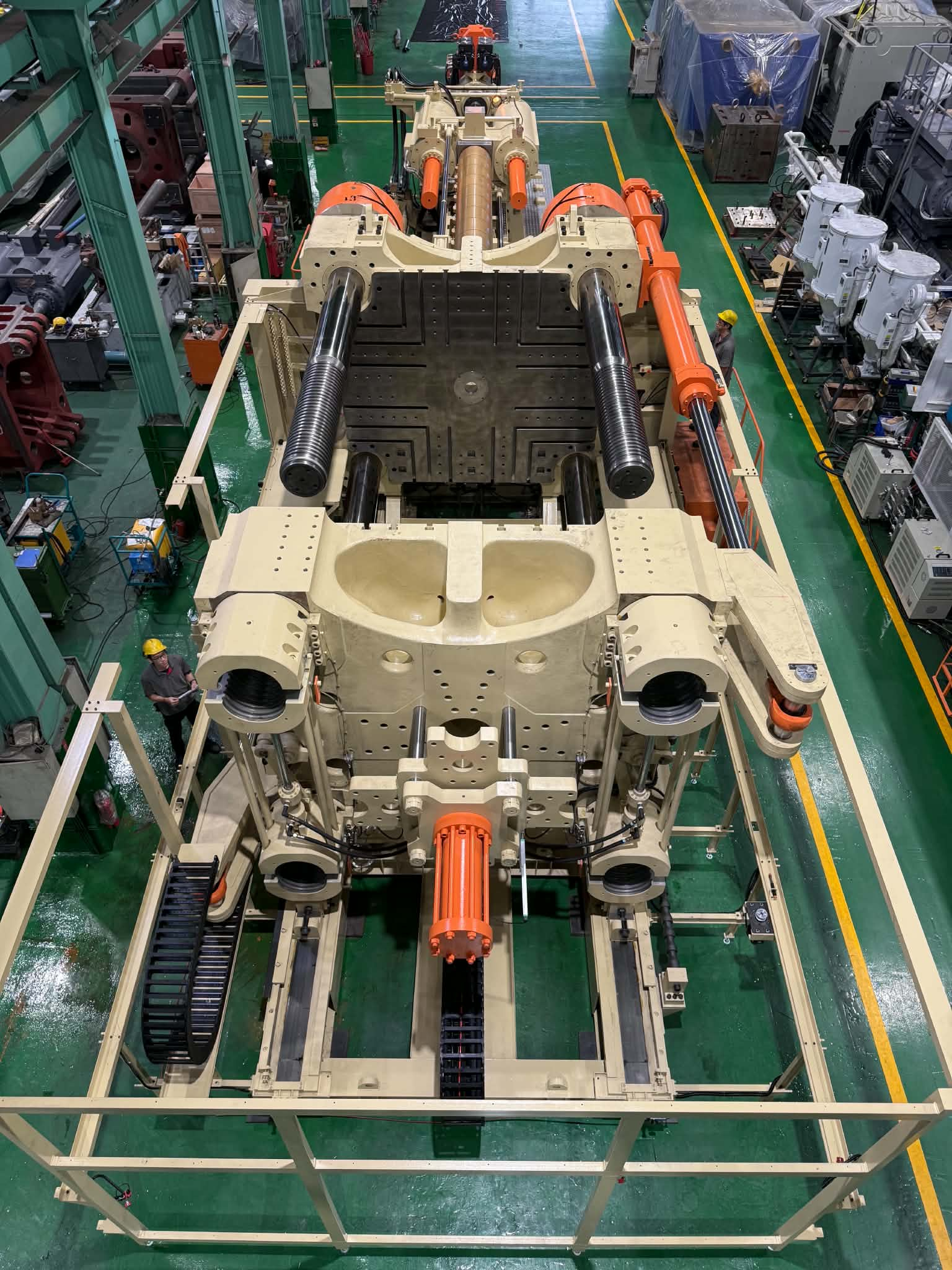
Walking onto the assembly floor of Chuan Lih Fa (CLF) in Taiwan, the sheer scale of their latest engineering feat hits you before you even cross the threshold. Towering over the technicians like a steel monolith is their newly unveiled 5000-ton two-platen injection molding machine. Currently undergoing rigorous dry-run testing, this mechanical giant is preparing for a major overseas assignment: crossing the ocean by late June to join the production line of a US retail and logistics heavyweight, where it will mass-produce oversized, heavy-duty plastic fruit crates.
At a time when the global plastics sector is wrestling with volatile shipping costs and tightening factory floor space, the birth of this mega-machine marks a significant leap forward for Taiwan’s machinery manufacturing tier. I sat down with Jenny, CLF’s Sales Manager, to dissect how a Taiwanese builder successfully challenged the traditional domain of ultra-large European brands by offering a high-value alternative.
A Heavy-Duty Foundation: 60 Years of Engineering Foresight
For many mid-sized machinery plants, building a 5000-ton machine is an operational bottleneck—often restricted by inadequate factory ceiling heights or insufficient overhead crane capacities. For CLF, however, this milestone has been 60 years in the making.
"We owe a great deal to our founder, Chairman Lin, for his incredible foresight," Jenny notes. "He was always deeply committed to maximizing our in-house machining capabilities. Decades ago, he began investing heavily in massive working institutions and heavy-duty milling machines. Today, our factory floor features a dedicated zone equipped with Taiwan’s only overhead crane system capable of lifting components of this massive weight class. The infrastructure has always been ready; we were simply waiting for the perfect client match."
This hardware readiness allowed CLF to seamlessly move from blueprint to reality. By mid-June, the machine will complete its structural and mechanical dry-runs in Taiwan. By the end of June, it will be disassembled and shipped to the United States. Since the client’s massive molds are already based in the US, CLF is deploying a specialized engineering team to the American facility to oversee the final tool-up and on-site production testing.
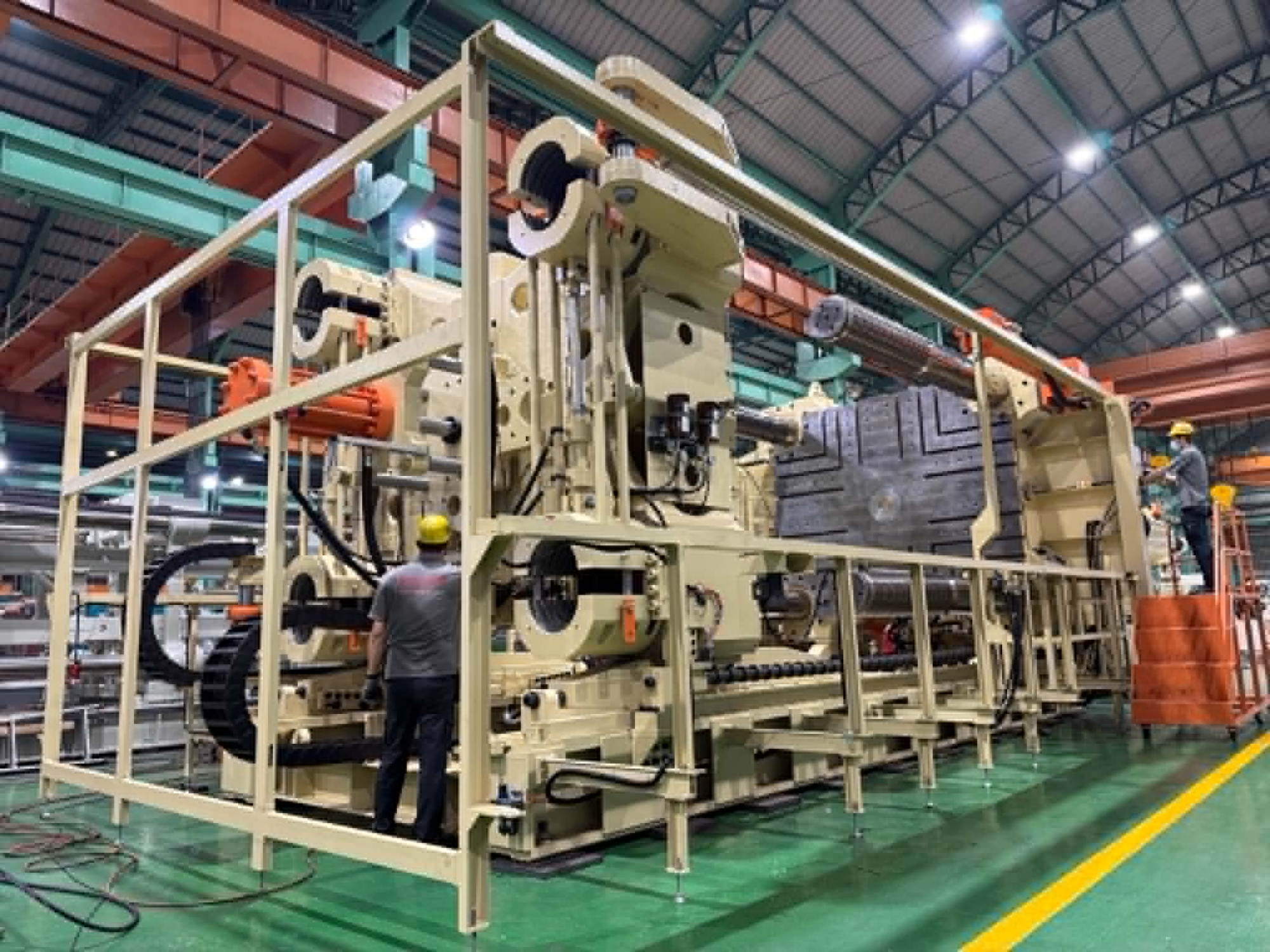
The Two-Platen Advantage: Precision Real Estate and Maximum Stroke
When the US buyer initially began sourcing a solution to produce giant logistics fruit crates, the industry's default choice was typically a traditional three-platen toggle injection machine. However, CLF’s engineering team stepped in as technical consultants and strongly recommended a two-platen design. The strategy relies on two precise calculations regarding factory real estate and part geometry:
1. Slashing Factory Footprint by 15% to 20%
Oversized machinery naturally consumes immense plant real estate. Because the US client has aggressive long-term expansion plans to install more large-scale production lines, space optimization was paramount. By choosing CLF’s two-platen configuration, the overall length of the machine was reduced by 15% to 20% compared to a conventional three-platen toggle system. This footprint reduction allows the client to fit more machines into the same floor area, effectively doubling their production efficiency per square foot.
2. Tailored for "Deep-Draw" Moldings
The targeted product—a heavy-duty crate used widely across major US supermarkets and transport hubs—presents a square, deep-box geometry. This requires an exceptionally long mold-opening stroke.
"For these deep-draw container designs, a two-platen machine offers vastly superior stroke flexibility," Jenny explains. "It allows for longer opening strokes within a shorter machine frame. Furthermore, when the client needs to switch to different product molds in the future, the two-platen system enables significantly faster tool changes, directly boosting Overall Equipment Effectiveness (OEE)."
3. Structural Rigidity Over Micro-Precision
When dealing with industrial logistics crates, the engineering priorities shift. "For parts of this scale, micro-surface precision isn't the primary goal," Jenny points out. "What the buyer truly demands is absolute, long-term stability under relentless, high-speed production. The machine must run flawlessly day in and day out."
Because these fruit crates must withstand tons of stacked agricultural weight, their designs feature dense networks of reinforcing rib structures. To fill these complex mold cavities, the plastic melt must travel flawlessly through intricate channels. CLF heavily reinforced the platen structural integrity to ensure zero deformation under immense clamping forces. By pairing low-speed injection with high holding pressure, the machine locks in pressure perfectly during the cooling phase, completely eliminating product shrinkage or warping—the historical Achilles' heel of large-scale moldings.
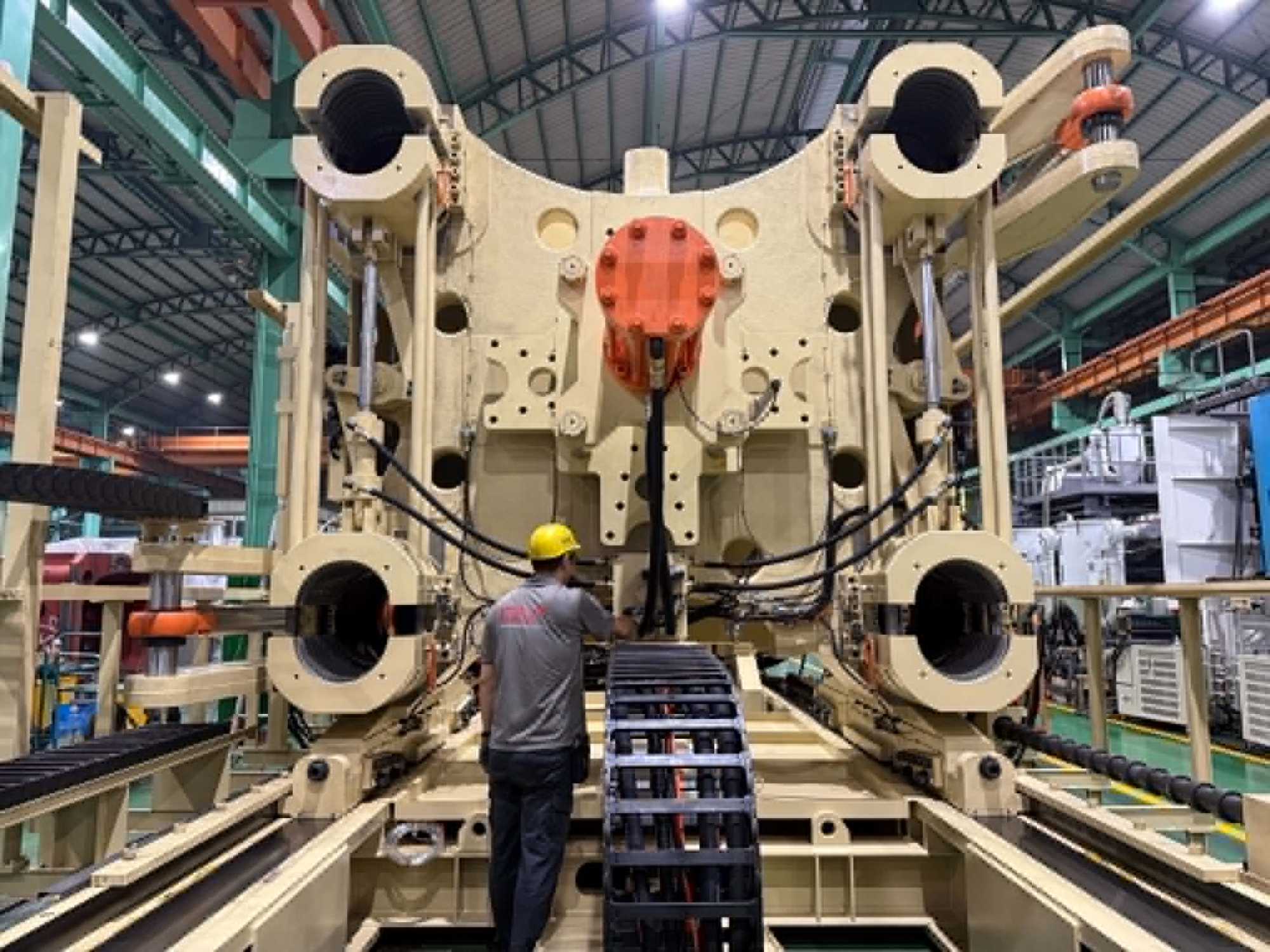
"Client-First" Customization: Engineering for Long-Term Peace of Mind
What truly positions CLF as a formidable alternative to ultra-expensive European brands or unproven, large-scale alternatives is their high-ROI custom engineering and a deep-seated commitment to consultative partnership.
Take shot weight capacity as an example. The US client initially specified their needs based on their current 30 kg fruit crate. CLF's R\&D team, however, looked a step ahead.
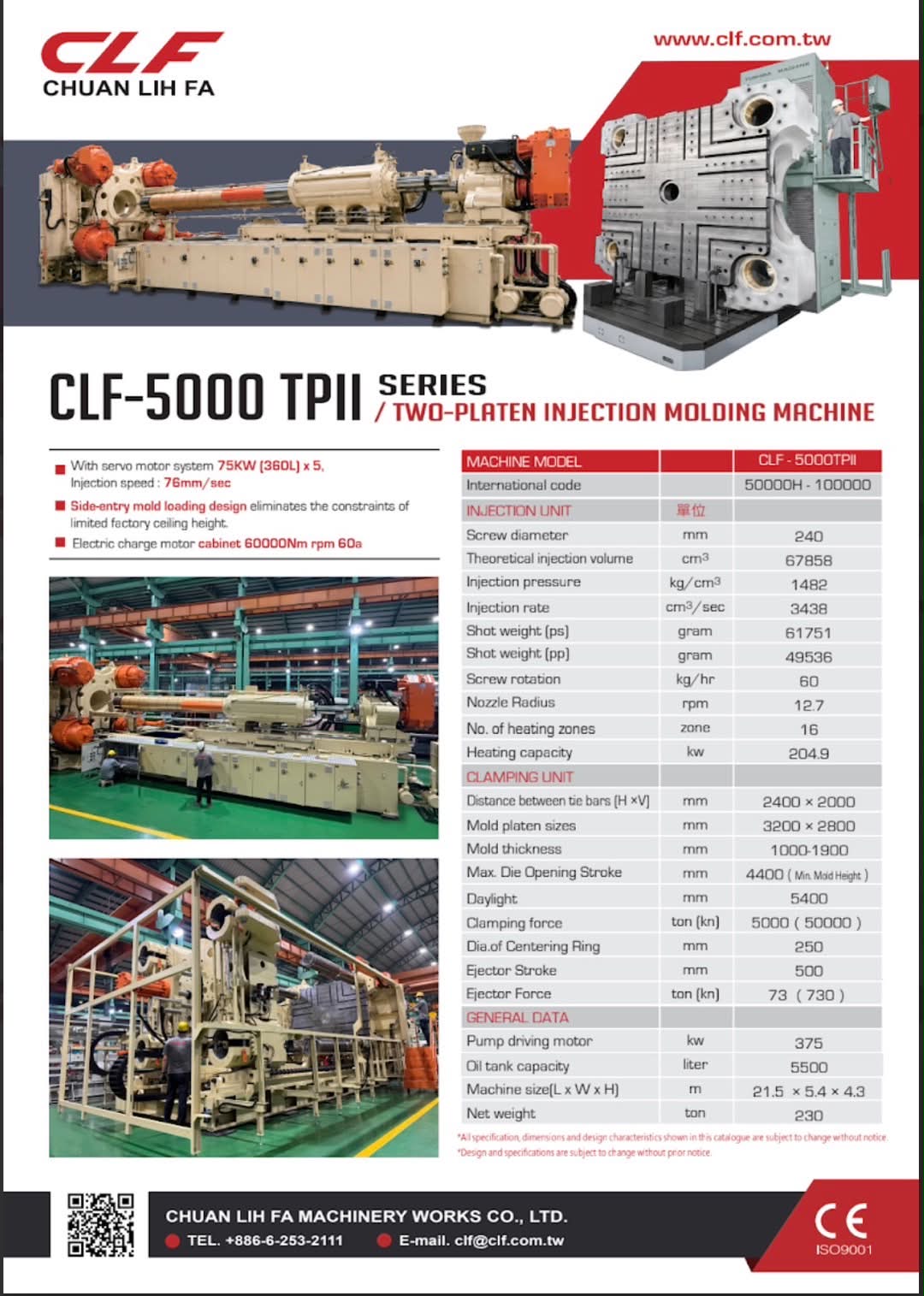
"We advised the client that their future product portfolios would likely demand heavier part weights," says Jenny. "Therefore, we engineered this 5000-ton machine to comfortably handle a maximum stable capacity of up to 42 kg. Our philosophy is that if a machine constantly runs at 100% capacity, component wear accelerates. By giving them a 42 kg ceiling while they run 30 kg parts, the machine operates comfortably at roughly 80% stress. This drastically reduces maintenance fatigue and extends machine life."
Additionally, to meet the strict green manufacturing targets of the US market, CLF integrated an electric charging (plasticizing) system into this titan. Compared to traditional fully hydraulic charging setups, this electric drive upgrade trims energy consumption by 20% to 50%—an immense slash in utility bills for a machine of this magnitude.
More Than a Vendor: A Turnkey Manufacturing Partner
Throughout this cross-border project, CLF's role extended far beyond shipping a piece of iron. Acting as a complete turnkey consultant, CLF leveraged its decades-old supply chain network in Taiwan to coordinate auxiliary equipment and automate the entire production setup.
"CLF is proud to have a vast portfolio of global clients who have partnered with us for 15, 20, or even 30-plus years," Jenny reflects. "They don't view us as a mere equipment vendor; they see us as an extension of their team. We act proactively—our primary goal is to help clients optimize their capital expenditures while achieving maximum operational output."
As this 5000-ton titan prepares for its American debut this summer, Chuan Lih Fa is demonstrating to the global market that when it comes to mega-scale injection molding, Taiwan doesn't just build machinery—it engineers long-term profitability.
شريك التعاونية